

DGNB

Automated DGNB documentation for the construction phase

Collect, validate and structure transport, materials, soil and certification data automatically, and gain full overview without adding administrative hours.
Book a demo

Main features

Built to handle the complexity of DGNB without adding complexity to your project.

Real transport documentation

Reel transport-dokumentation

Automatically collect and structure transport data for materials, waste, soil and machinery - based on real delivery documentation.

Automated material approval & DGNB material compliance checks

Upload material datasheets and let the platform automatically evaluate health indicators, emissions, and DGNB criteria. Potential risks are flagged before materials are approved.

Certified wood tracking

Extract certification data directly from delivery notes and calculate the percentage of certified wood automatically.

Soil & waste documentation

Track excavated volumes, soil classifications and waste transport through automatic extraction of weighing notes and documentation.

Approved materials list - always updated

Maintain a structured, searchable overview of approved materials and automatically match delivery notes against it.

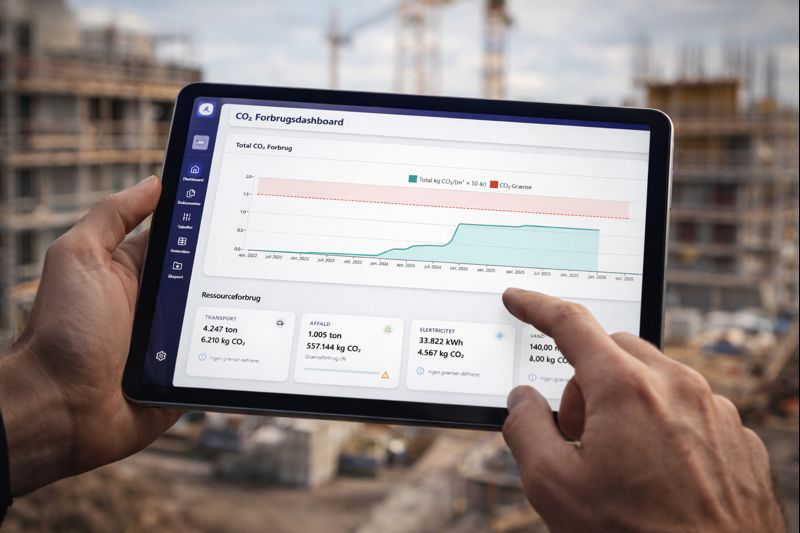
Full overview dashboard

See what is documented, what is missing, and where risks exist, without digging through folders and Excel sheets.
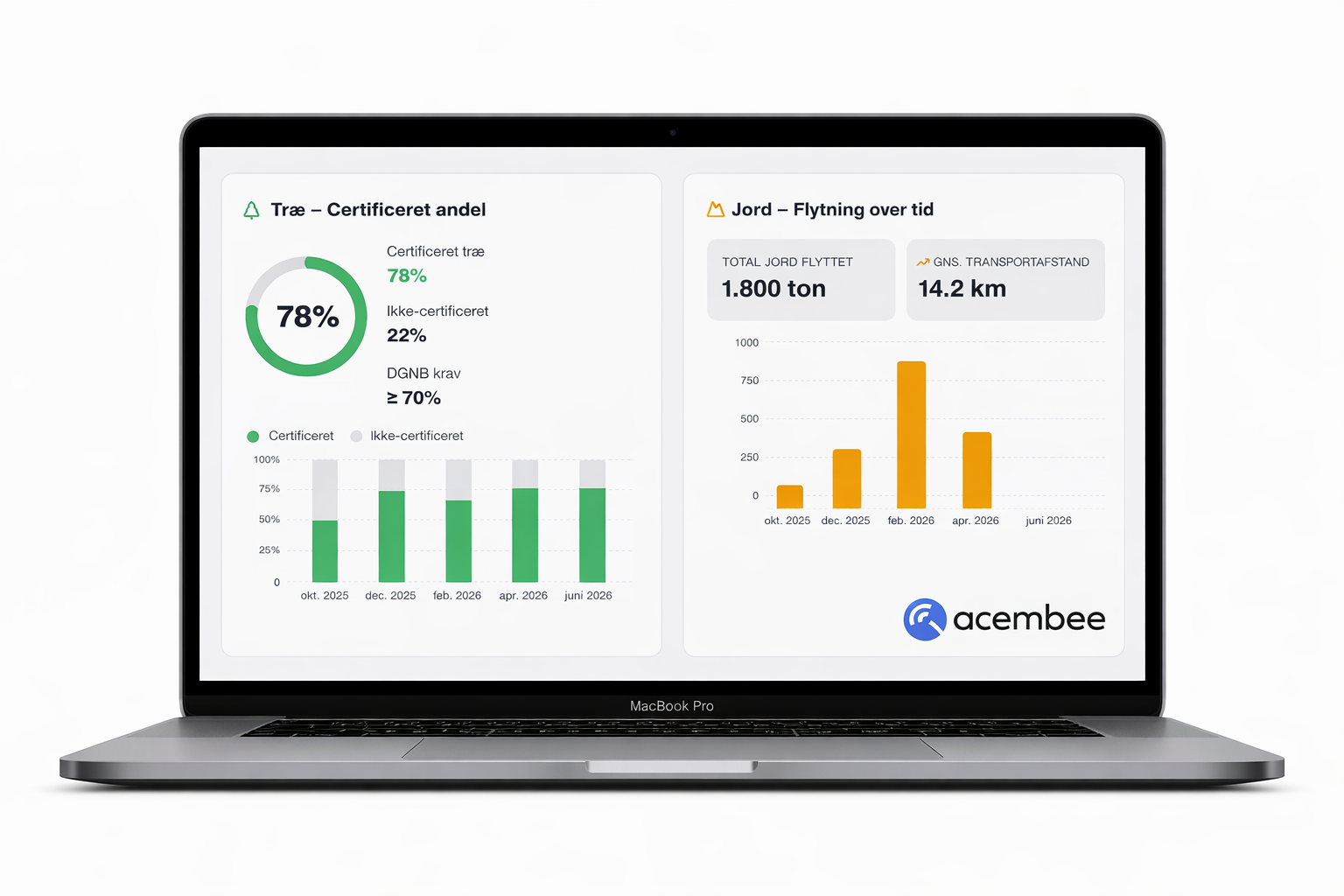
Track the share of certified wood automatically based on delivery documentation and see how your project performs against DGNB requirements in real time.
Get a clear overview of soil volumes and transport distances over time, based on actual project data, without manual tracking.

We work with some of the most
ambitious contractors in the industry

Trusted by contractors who want structure, overview and fewer reporting hours, without slowing down project execution.

DGNB documentation without the administrative overload

If you work with DGNB during the construction phase, you know how quickly the documentation grows. Datasheets from suppliers, delivery notes from subcontractors, transport data, soil classifications, and wood certificates — all of it needs to be registered and linked to approved materials.

Acembee turns this manual process into a structured workflow. Subcontractors forward documents to a dedicated project email, and the platform reads them, extracts the relevant data, and matches materials with your list of approved materials.

Material health data, emissions, and DGNB material criteria are evaluated automatically. Certified wood is calculated, soil volumes are registered, and you always have a clear overview of whether the documentation is complete. The DGNB responsible still owns the process — but now with clarity instead of spreadsheets.

How does it work

A clear, step-by-step workflow that removes manual handling and keeps documentation under control.

1. Submit data

Datasheets, delivery notes and weighing notes are forwarded to a dedicated project email or uploaded directly.

Learn more

2. AI extracts and evaluates data

The platform reads the documents, extracts relevant information and evaluates material health indicators, emissions data and other required DGNB parameters.

Learn more

3. Review materials

The user reviews flagged risks and approve materials in the platform, creating a structured approved materials list.

Learn more

4. AI matches delivery notes

When materials are delivered, the system checks whether they match the approved list and logs quantities.

Learn more

5. Get full overview

Dashboard shows documentation status, certified wood %, soil volumes, transport data and potential compliance gaps.

Learn more

6. Export DGNB documentation

Download documentation for DGNB certification easily and automatically.

Learn more

DGNB points &
certification impact

DGNB-point & certificerings-niveau

DGNB is a point-based certification system where documentation based on real data can improve a project’s final score. When documentation is incomplete or too time-consuming to manage manually, projects often end up relying on standard values.

Acembee makes it possible to work with real data throughout the construction phase. The platform continuously structures and validates documentation, making it easier to pursue additional DGNB points without increasing the administrative workload.

The result is better documentation, and better control over the project’s certification level.

FAQ

What do we need to document as a contractor on a DGNB project?

As a main or trade contractor on a DGNB project, you typically need to document: the share of FSC/PEFC-certified timber (ENV 1.3), health indicators and emissions like VOC for chemical products (ENV 1.2), environmental impact from specific materials such as concrete and steel (ENV 1.1), resource use and waste management on site (PRO 2.1), and transport data for materials, machinery, and soil.

The specific requirements depend on the project's ambition level and how the developer has structured their points strategy. What they all have in common: documentation must be traceable and tied to actual deliveries — not estimates.

When in the construction phase should you start documenting for DGNB?

From day one. That's the short answer. The slightly longer one: documentation collected continuously is significantly easier to work with than documentation reconstructed after the fact. Delivery notes, weighbridge tickets, and datasheets accumulate fast, and if they aren't logged close to the delivery date, tracing them back to specific materials and quantities becomes time-consuming.

That's precisely why Acembee runs in the background from the start of the project, so documentation is complete and structured by the time the certification process begins.

Does Acembee replace the DGNB auditor?

No. Acembee does not replace the auditor, and that's not the intention. The DGNB-responsible person still owns the process, the assessments, and the professional judgement calls. What Acembee does is remove the manual work underneath: collecting documents, extracting data, matching delivery notes, and tracking what's missing.

The result is that the DGNB-responsible person spends their time on professional work rather than administration, and the auditor receives structured, audit-ready documentation instead of a folder of loose files.

Does the platform work with the documents we already receive?

Yes. Acembee is built to work with the documentation that already flows into a construction project — datasheets from suppliers, delivery notes from subcontractors, and weighbridge tickets from waste collections. Subcontractors forward documents to a dedicated project email, or they can be uploaded directly in the platform.

There are no requirements for special formats, new systems on the subcontractors' end, or changes to existing workflows. The platform handles what comes in.

How do you document the share of FSC/PEFC-certified timber for DGNB?

DGNB requires that a certain share of the timber used in construction is FSC or PEFC certified, and that this can be documented. In practice, that means certification details need to be extracted from delivery notes and matched to the actual quantities delivered to the project.

In Acembee, this happens automatically. The platform extracts certification data from incoming delivery notes and continuously calculates the current share of certified timber, so you can always see whether the project is on track relative to the DGNB requirement, without anyone having to count manually.

What happens if a material doesn't meet DGNB's chemical requirements?

If a material doesn't meet DGNB's chemical requirements — for example VOC emission thresholds or health indicators — it will typically either reduce the point score or block a specific certification level. What matters most is when it's discovered: at approval or at audit.

In Acembee, materials are assessed automatically when datasheets are uploaded. If a product has potential issues relative to DGNB criteria, it's flagged before it ends up on the approved materials list. That gives you time to find alternatives, rather than discovering the problem when it's too late to change anything.

Ready to simplify DGNB documentation?

Get structured, automated and audit-ready documentation, without increasing headcount.
Book a demo